
Common beginner kitesurfing questions answered
In short
Kitesurfing is easier and safer to learn than it looks, as long as you start with modern gear and proper instruction.
The early questions almost everyone asks share one honest answer: get lessons, ride the right kite size, and respect the wind.
What you'll learn here
The real answers to the questions every new kiter asks, from cost and gear to jumping, going upwind and staying safe.

Everyone starts with the same handful of questions. Here are honest answers to the ones we hear most from people thinking about their first session.
What it costs and how to start
The gear question comes up first. A used beginner setup can start low, but budget for recent kites rather than the cheapest listing you find.
Older kites lack the depower and quick-release safety systems that modern kites build in as standard, so age matters more than price.
The best way to start is with an instructor. You could buy a kite and teach yourself, but progress is slow and the mistakes can be expensive or dangerous.
A good instructor teaches kite control gradually, starting small and building up, so you reach the basics safely and then progress at your own pace.
"Kitesurfing is only as risky as you let it be, respect the wind, keep your wits about you, and it becomes a safe, addictive sport."
Choosing a kite size
There is no single right size. The kite you can use depends on your weight, your skill level and the wind strength on the day.
Any decent shop or instructor can point you to the sizes that suit your local conditions, which saves you buying the wrong kite twice.
Is it dangerous?
Yes, and so is driving a car. Take care, stay aware of others on the water, and you can enjoy a long and safe kiting life.
You do not need another board sport first. Existing board or kite skills speed things up, but plenty of people learn to stand up and have fun with no prior experience at all.
What happens when the kite crashes
Modern kites relaunch easily. A tug on the right lines and the kite lifts off the water again, ready to fly.
Now and then a badly crashed kite will not relaunch, which is exactly why the golden rule is never go out further than you can comfortably swim back.
Upwind, jumping and the power zone
Yes, a kitesurfer can ride upwind. It is one of the first real milestones, and it is what lets you return to where you started instead of walking back along the beach.
Jumping height is limited only by wind and nerve. Your first hops of 20 cm will feel enormous, and skilled riders eventually clear well over 10 metres.
The power zone is the downwind area where the kite generates its strongest pull, and learning where it sits is a big reason to take lessons.
You do not want to discover the power zone by accident. Finding it while standing on the beach with a powered-up kite is how beginners get dragged or hurt.
Practising and meeting other kiters
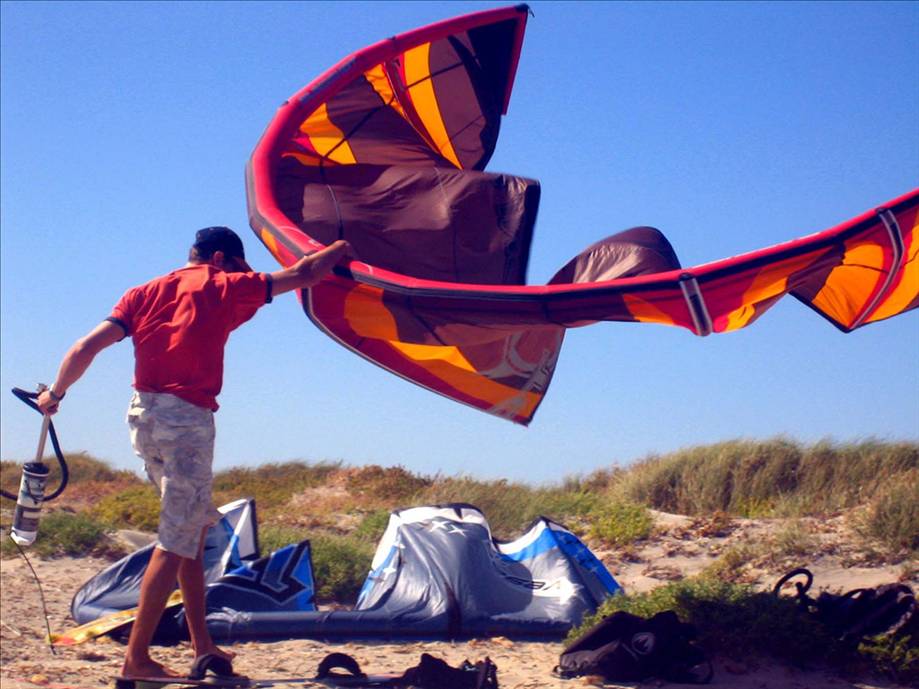
You can practise on land, but only with a small trainer kite. A full water kite is far too powerful for land use and risks serious injury.
Meeting other kiters is easy. Most are happy to chat while they rig up, so walk over and say hello when you see people setting up on the beach.
If it has not been windy for a while they may be keen to launch quickly, so read the mood and keep the chat short on a good day.
When you are ready to buy, plenty of used kites and boards turn up in the classifieds , which is a good place to find affordable beginner gear.
Questions & Answers
How long does it take to get riding? Most people reach basic riding within a short series of lessons rather than a single session. Your instructor sets the pace to your progress, moving from trainer kite to water skills to a board.
Should I buy my own gear before lessons? No. You will outgrow beginner-friendly kit quickly, and a school lets you ride the right size for each stage. If you already own a kite, an instructor can check it and show you how to rig it safely.
How do I pick a good spot to learn? Look for flat, steady side-onshore wind, plenty of open water, and no downwind obstacles. Checking the wind forecast for your city before you go stops you wasting a lesson on a wild or gusty day.
What is the single most important habit? Never go out further than you can swim back. Kites usually relaunch, but on the rare day one will not, that habit is what turns a bad session into a mild inconvenience.